From the original offering · Historical text
The Matador Ranch is nationally recognized for its quality cattle operation as well as tremendous wildlife.
The philosophy of the current family ownership has always been to preserve, improve and protect the land. The excellent ranch management, coupled with outstanding wildlife management, have transformed the Matador Ranch into one of the premier ranches in Texas. Management has focused on land stewardship in the form of invading brush control through mechanical and aerial eradication, along with prescribed burns from time to time used to eliminate invasive plant species. This brush control not only improves and increases livestock grazing, but also provides more desirable habitat for wildlife. Additionally, water features have been improved and added, which helps distribute livestock throughout the ranch for better grazing practices. The Texas Parks and Wildlife Department’s 2010 Lone Star Land Steward Award was awarded to the Matador Ranch recognizing their outstanding land stewardship practices. Other land stewardship honors include:
- 2010 Outstanding Rangeland Stewardship Award from the Texas Section Society for Range Management/Texas and Southwestern Cattle Raisers Association
- 2011 Region 4 Winner in the Environmental Stewardship Award Program sponsored by the Department of Agriculture’s Natural Resources Conservation Service, US Fish and Wildlife, Dow AgroSciences, National Cattlemen’s Foundation, and the National Cattlemen’s Beef Association
- Koch Industries’ 2012 Environmental Health & Safety Excellence Award
- 2019 Beef Quality Assurance Cow/Calf Award
This Division of the Matador Ranch contains approximately 27,288 acres. Access to this portion of the property is by paved highways and graded county roads.
The ranch is located in a desirable area with precipitation averaging 22 – 24 inches per year. Generally, the ranch receives 5 – 6 inches of snow through the winter months. Most of the precipitation occurs in May and June, with July and August being hot and dry. In the fall the ranch generally receives beneficial rains, growing strong grass lasting through the winter months. Most ranchers in this area run a cow/calf operation with supplemental protein feeding through the winter months.
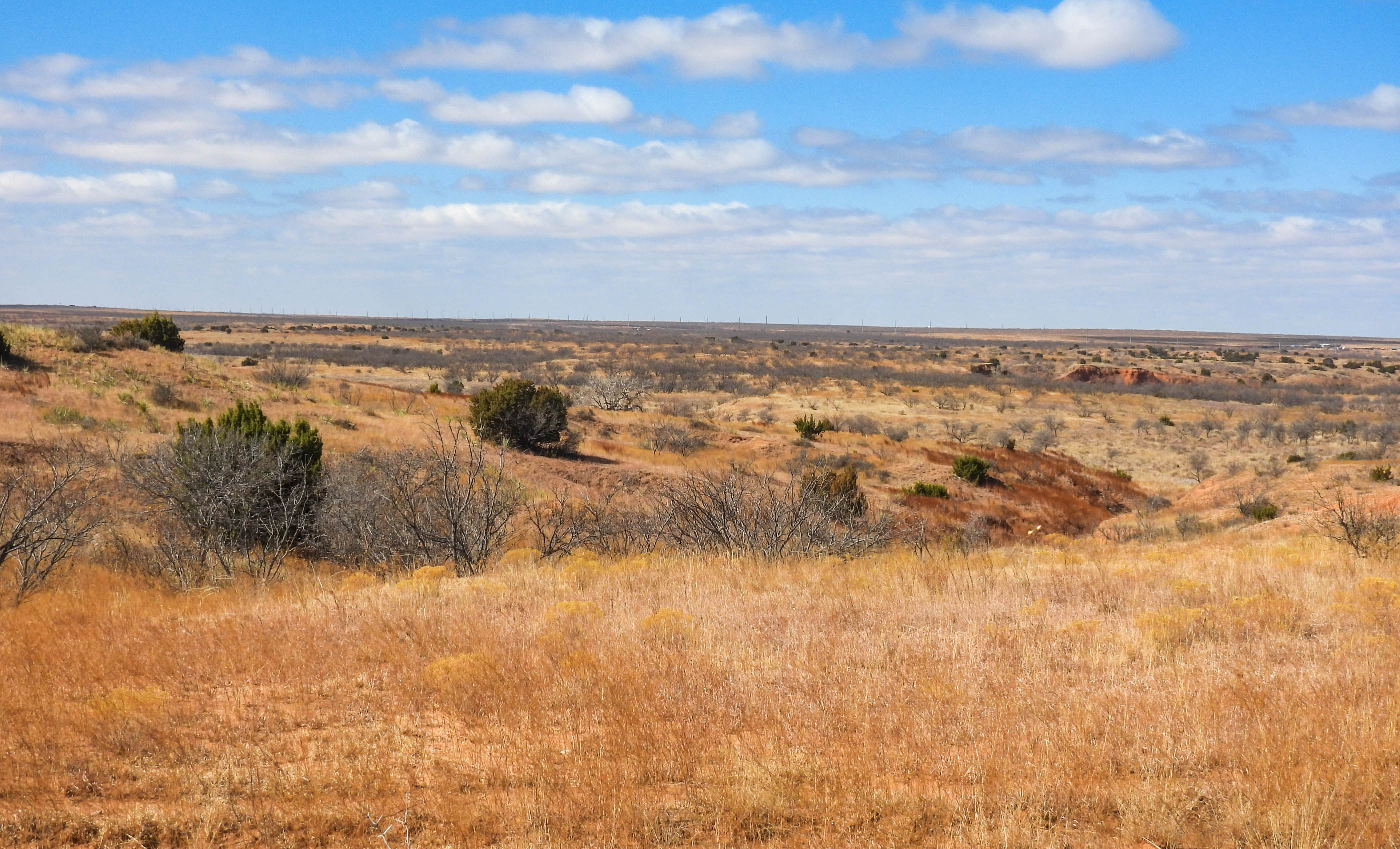
The west portion of this Division is described as fairly level and gently rolling country with deep productive soils. This area has a solid turf of native grasses. There were several small, cultivated fields on this portion of the ranch and they are now seeded to improved grasses. This portion of the ranch has varying concentrations of Mesquite. Much of the neighboring land around this portion of the ranch is in cultivation, being farmed in cotton and wheat.
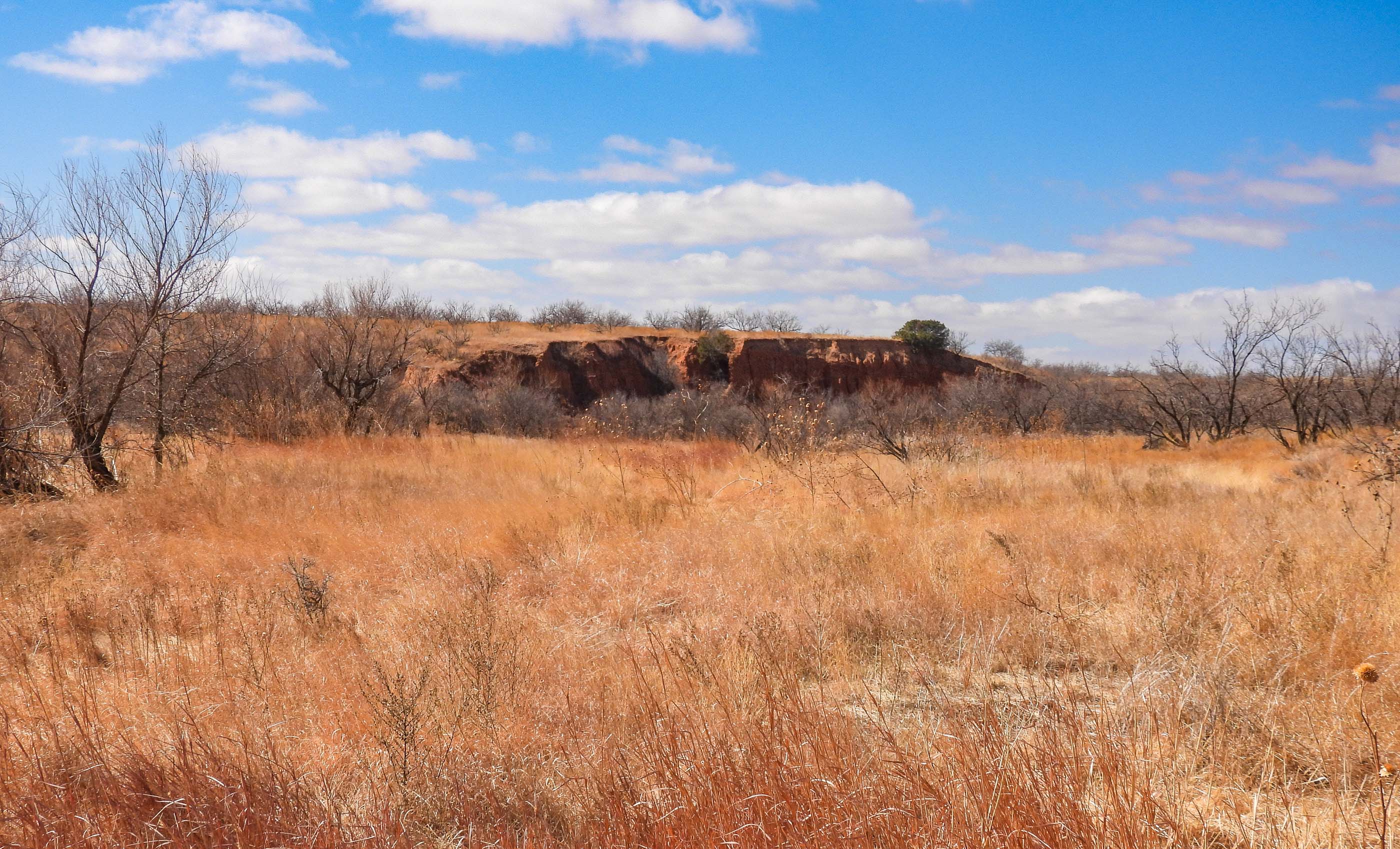
To the east, the country becomes more sloping with pronounced drainages. Mesquite is scattered through this portion of the ranch, as is Sand Sage and Shin Oak. Towards the center of this Division the terrain becomes more broken, finally transitioning to rough breaks, canyons and ridgelines on the far east side of the property. Juniper is more prevalent in this area of the ranch.
The western and northern portions of the Russellville Division generally have clay loam and sandy loam soils. The more broken canyon country on the southeast portion of the ranch has red clay soils.
The property is fenced and cross-fenced into approximately 25 pastures and traps. Elevations range from approximately 2,000 to 2,800 feet.