
“I must say, as to what I’ve seen of Texas, it is the garden spot of the world. It is the best land and the best prospects for health I ever saw, and I do believe it is a fortune to any man to come here.” - Davy Crockett
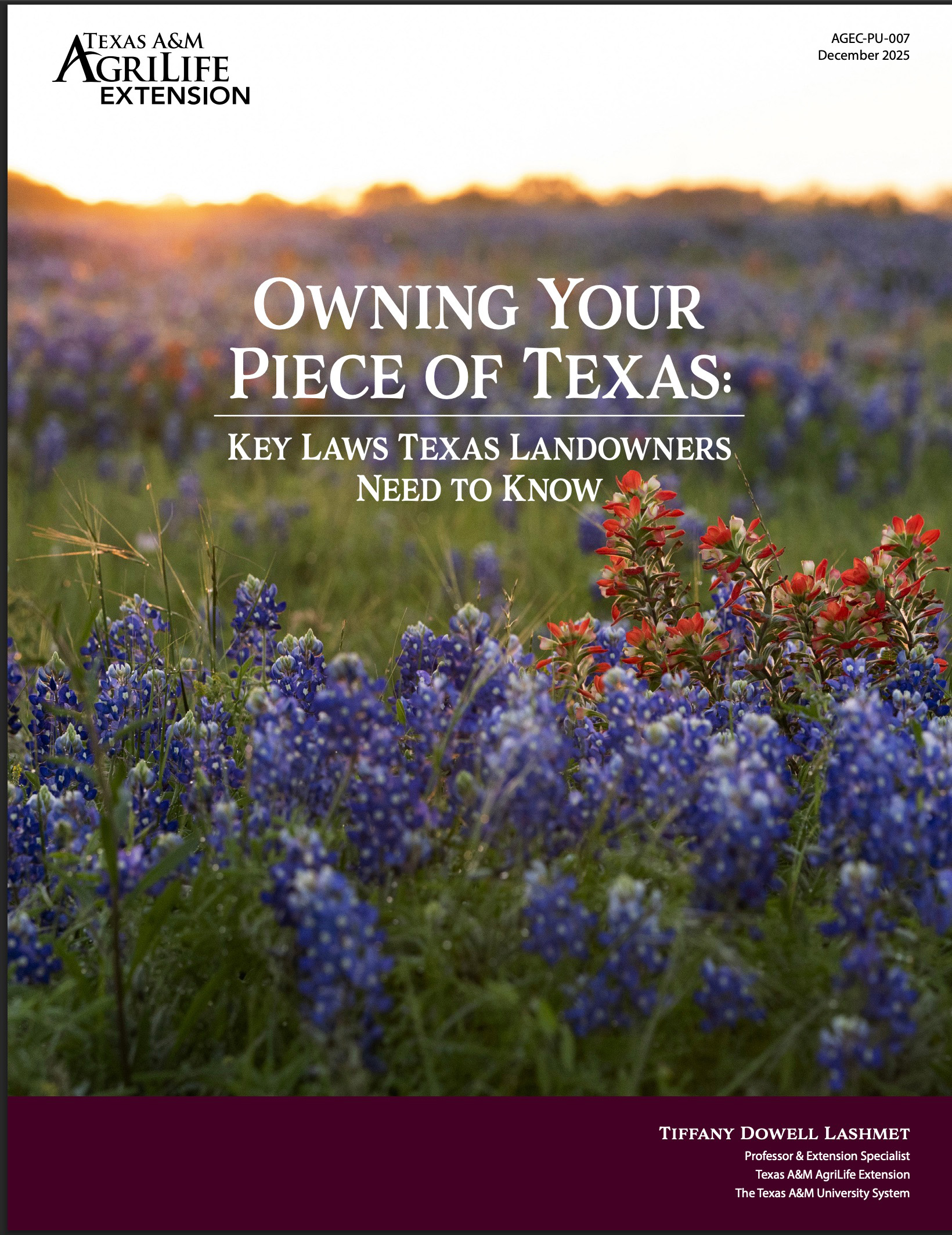
This handbook by Tiffany Dowell Lashmet offers a basic overview of several legal issues facing Texas landowners. Agricultural law is broad and complex, and this handbook is no exception. By the time a person has read the entire book, it may feel as if a law school diploma should be included.
Specifically, my goal is to write this handbook in a manner that is both understandable and practical for non-attorneys. Having grown up on a family farm and now owning one myself, I always aim to write something that farmers at the local coffee shop can understand and discuss.
Additionally, for each topic, I will include a list of resources where readers can find more detailed information on the legal issues discussed. With that, let’s get started!
Texas Ag Landowner Legal Highlights
Owning agricultural land in Texas is a significant asset, but it also entails important legal responsibilities that every landowner should understand.
Here are a few key things to keep in mind:
- Know exactly what you own: In Texas, owning land does not always mean owning everything beneath or associated with it. Mineral rights, groundwater rights, and even wind rights may be owned separately.
- Do your homework on property records: Reviewing deed records can help uncover important details like easements, liens, mortgages, lease agreements, or restrictions that may affect your property.
- Be aware of existing land-use agreements: pipelines, power lines, water access, or other easements may already be in place and could affect how you use your land.
- Co-owning land comes with shared responsibility: If property is owned with family members or business partners, it is important to understand who is responsible for taxes, repairs, and decision-making.
- Mineral ownership can get complicated fast: Just because you own the surface does not necessarily mean you own the minerals beneath it, which can affect leases and land-use decisions.
- Planning ahead can prevent costly issues: Clear documentation and understanding ownership rights can help avoid disputes involving inheritance, transfers, or property use down the road.
The bottom line is that agricultural land ownership in Texas is more than just owning acreage—it is about understanding and protecting the rights that come with it.
Read the full handbook
Click the handbook cover below to open the full PDF.